💨 Smoker
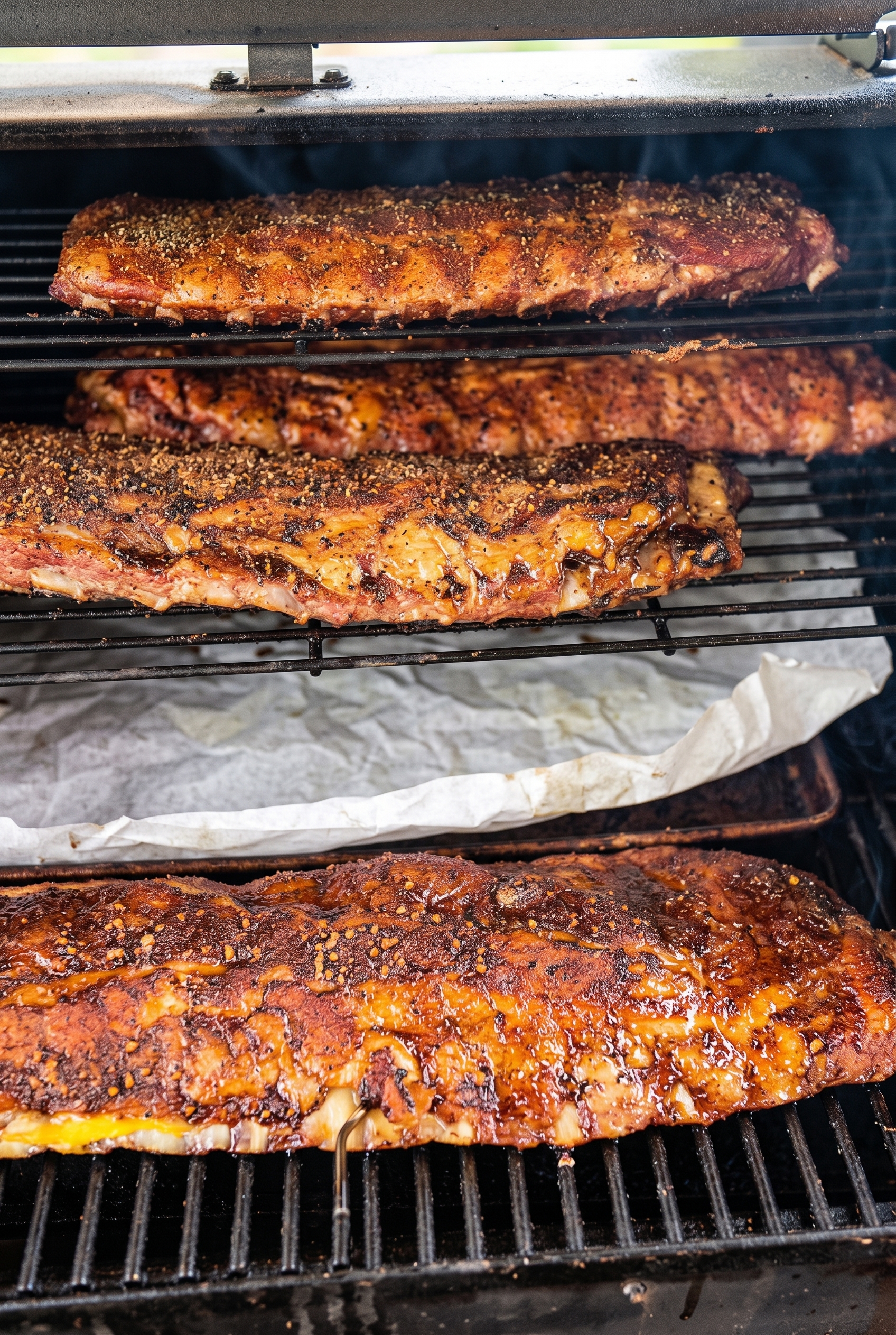
Sometimes the best way to figure out what you like is to just run the experiment. This cook is three full racks of ribs, three completely different dry rubs, and zero barbecue sauce — because if the rub, the smoke, and the meat are all doing their job, sauce is optional at best. Kosmo's Q brought a sweet and savory honey-chile profile, Lane's Brancho leaned deep and peppery with that brisket-ancho combo, and Butt Rub kept it classic and all-purpose.
The method is the classic 3-2-1-style breakdown adapted for a pellet smoker: unwrapped low and slow to build a dark mahogany bark, wrapped tight in foil to push the meat tender, then back on the grates uncovered to firm the bark back up before it hits the cutting board. Three racks, three rubs, one Laredo — and the bark on all three came out different enough to actually taste the difference side by side.
Meat
Featured Dry Rubs (1 Rack Each)
Wrapping
Remove the membrane from the bone side of each rack and trim any loose fat or flap meat. Apply a light binder if desired, then season each rack generously with its designated dry rub — Kosmo's Q, Lane's Brancho, and Butt Rub, one rub per rack. Let the seasoned ribs sit at room temperature for 15–20 minutes to allow the rub to sweat into the meat.
Preheat the Pit Boss to 250°F. Place the seasoned racks directly onto the smoker grates, using upper and lower racks as needed. Close the lid and smoke unwrapped for 2.5 to 3 hours, allowing the dry rub to set and develop a dark, rich mahogany bark.
Pull the ribs and wrap each rack tightly in a double layer of heavy-duty aluminum foil, meat-side down. Place the wrapped racks back onto the smoker at 250°F for another 1.5 to 2 hours, until the meat pulls back from the bone tips.
Carefully open or vent the top of the foil packets, exposing the bark. Return to the grates for the final 30–45 minutes to firm up the crust and let excess moisture evaporate — no sauce needed.
Transfer the ribs to a butcher block and let rest for 10–15 minutes. Slice between the bones and serve immediately to showcase the deep smoke ring and savory dry-rub crust.
Running three rubs side by side is the best way to actually learn what you like instead of guessing. Keep a mental note (or a real note) of which rack is which as you season — once they're on the smoker they'll look nearly identical. The unwrapped bark-setting step at the end matters more than it seems; skip it and you'll lose that crust to the moisture trapped from the foil stage.